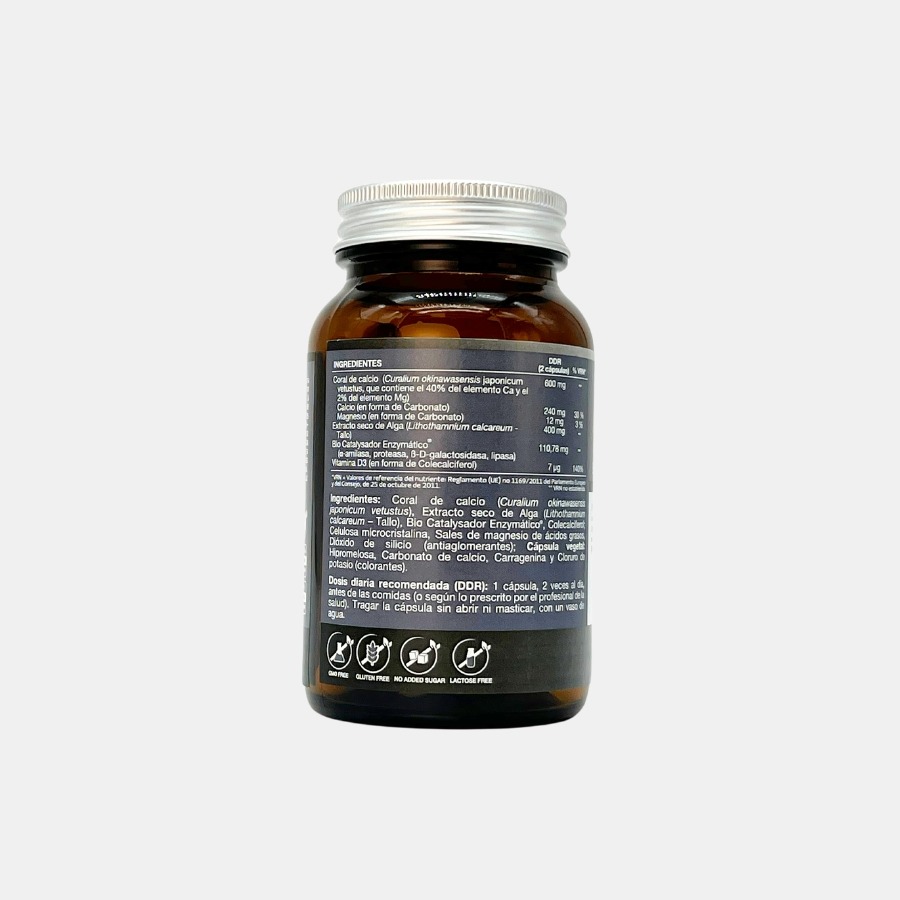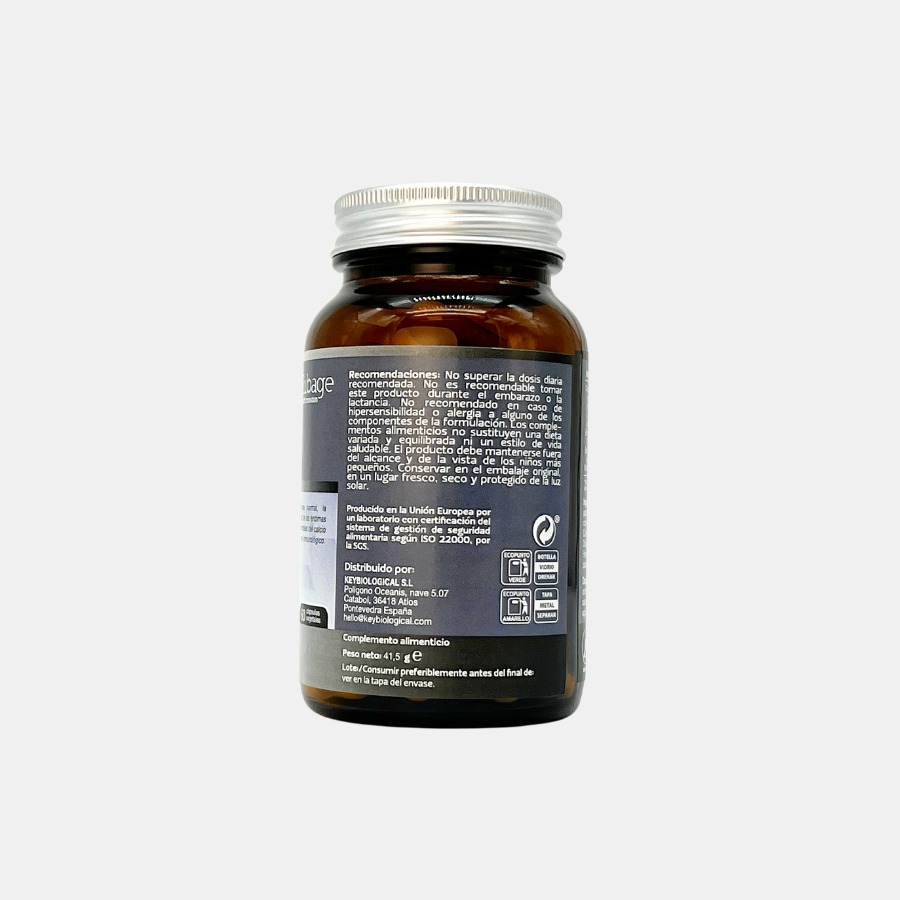



Coral Calcium (inert and uncontaminated corals collected in pure Okinawa waters, in accordance with environmental sustainability) fossilized, lacking iodine, also contains magnesium and trace elements in a fairly assimilable form. It is biodegradable and absorbed by the bones. The structure of the coral exoskeleton is similar to the spongy section of human bone. Since 1979, the coral exoskeleton has been recognized as a raw material for determining bone structures and as a substrate for the reconstruction of bone tissue. This substance is biocompatible with the human organism.
The Lithothamnium calcareum algae (small calcareous red algae found on the sandy bottoms of certain bays in Brittany) consists of a stem with a hard consistency and an organic pH of 9. It contains marine mineral substances, calcium carbonate, which has alkaline properties and stabilizes the acid-base balance.
Vitamin D3 (Cholecalciferol) is both a vitamin and a pro-hormone, which is why this substance plays an essential role in calcium metabolism (in Latin “Calciferol” means “carrier of calcium”):
- It regulates the level of serum calcium.
- It ensures the transport of calcium and its fixation in the bone structure.
- It contributes to maintaining plasma concentrations of calcium and phosphorus.
- It improves intestinal absorption of calcium.
- It minimizes the elimination of calcium through urine.
 Payment for your purchases is made through secure payment gateways which, depending on your selection, connect directly to your bank or PayPal account. All transactions are carried out under secure encrypted protocols and are protected by the entities through their own purchase validation systems. For security reasons, KeyBiological does not manage or store any of your bank card details.