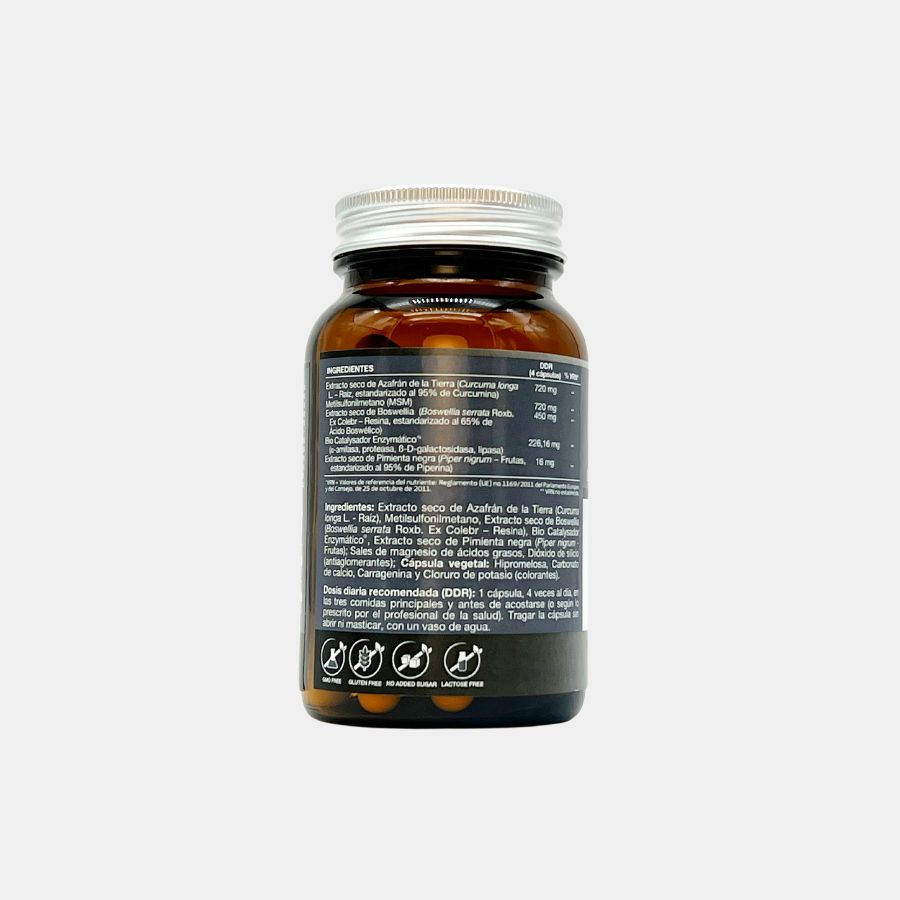



Curcumin from Indian saffron (Curcuma longa) has antiseptic and antibacterial action, and is effective for gastrointestinal problems and intestinal infections. It is a potent antioxidant, more active than vitamin E. It inhibits protein kinase C (PKC) and blocks epidermal growth factor (EGF) signalling. Physical trauma causes damage to epithelial cells, cyclooxygenase, an enzyme that forms prostaglandins from arachidonic acid. It is involved in inflammatory processes and cell growth. Misregulated by suppression of COX-2, this enzyme becomes primarily responsible for inflammatory activity. Curcumin regulates platelet aggregation, cyclooxygenase, lipoxygenase, as well as the transcription factor NFkB induced by cytokine upregulation, according to physiological needs for an adequate inflammatory response.
Methylsulfonylmethane (MSM) obtained by distillation is a natural source of sulphur. Methylsulfonylmethane is involved in draining organic tissues of inflammatory symptomatic effects. By forming or replacing sulphur bridges, MSM rapidly restores cell membrane flexibility and permeability. Cellular osmotic pressures are rebalanced, which helps to suppress the source of pain. The body’s reactivity is enhanced by the development of an airtight barrier to allergen attacks. It competes with parasitic agents and allergens at the level of receptors in the gastrointestinal wall, preventing the development of allergies. Methylsulfonylmethane is essential for the constitution of certain amino acids, B vitamins and is necessary for the formation of keratin and collagen. It is essential for maintaining the body’s pH. It is also one of the essential compounds for insulin production.
The boswellic acids in Boswellia (Boswellia serrata) promote microcirculation and enhance the metabolic synthesis of anti-inflammatory substances naturally present in the body. They reduce oedematous processes in the joints and skin without the side-effects of non-steroidal anti-inflammatory drugs. They inhibit the enzyme that synthesises leukotrienes, bronchoconstrictor substances that increase the inflammatory response. They improve blood circulation in poorly vascularised joints, allowing better drainage and nutrition.
Piperine from black pepper (Piper nigrum) amplifies the bioavailability of curcumin (up to 20 times). It facilitates the assimilation of beta-carotene and Coenzyme Q10 and opposes the depletion of glutathione in its reduced form (GSH). It stimulates the secretion of pancreatic enzymes (trypsin, chymotrypsin, lipase, amylase) and inhibits phase I enzymes (cytochrome P450).
 Payment for your purchases is made through secure payment gateways which, depending on your selection, connect directly to your bank or PayPal account. All transactions are carried out under secure encrypted protocols and are protected by the entities through their own purchase validation systems. For security reasons, KeyBiological does not manage or store any of your bank card details.